


I'd Already Lost Two Teeth. Then My Hygienist Told Me It Wasn't The Same Mouth.
Tonia G. was booked for minor gum surgery to save what teeth she had left. Three weeks with a $170 mouthpiece changed the conversation at her follow-up appointment. Here is exactly what happened, and why 150,000 people have quietly tried the same thing.
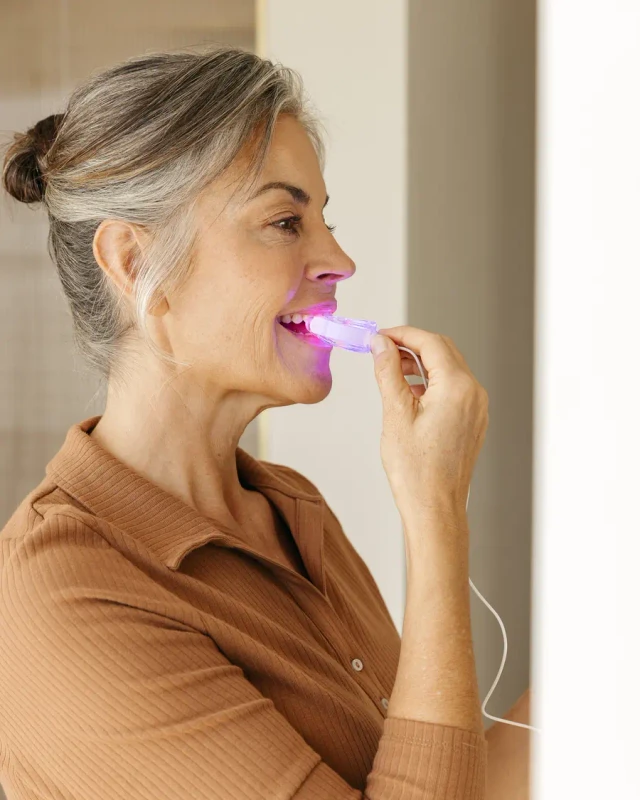
Tonia G. had grown up with what she calls "horrible dental problems," and years without dental insurance had let things slide.
By the time a hygienist sat her down to explain what was happening in her mouth, two teeth were already gone.
The diagnosis was periodontitis. Deep pockets of infection along the gumline that would eventually eat into her jawbone and cost her more teeth. The clinic scheduled her for minor gum surgery. A scalpel, stitches, and weeks of recovery.
She started researching alternatives, not for a magic pill, but so she could say she had tried everything before someone came at her gums with a blade.
That is when she found the Novaa Oral Care Pro. A $169.90 mouthpiece that used red and blue light to, supposedly, do what her hygienist said only a scalpel could do.
Her first reaction was the one you probably just had.
3 signs your gum recession has crossed into periodontitis
Pocket depth above 4mm
Your hygienist measures this at every cleaning. Above 4mm means bacteria have colonized below the gum line.
Persistent bleeding on brushing
Occasional bleeding is inflammation. Persistent bleeding after two weeks of clean flossing is infection.
Red or purplish gum tissue
Colour change means active infection, not just recession.
If two of the three are present, you are in Tonia's original position, not just moving toward it.
"I was skeptical but desperate."
Those are Tonia's exact words. Not marketing copy. A verified review still sitting on the product page for anyone to read.
The skepticism was warranted. On paper, the Oral Care Pro looks like the kind of gadget you would expect to see on a late-night infomercial. A plastic mouthpiece with LED lights inside. Ten minutes a day. Backed by claims that sound too tidy: red light for tissue repair, blue light for bacteria control.
But the alternative was worse. A scalpel. Stitches in the roof of her mouth. Weeks of soft-food-only recovery. And no guarantee that even that would stop the infection from spreading to more teeth.
She calculated the risk this way: sixty days of trying a $170 device with a full money-back guarantee, versus one gum surgery she could not undo.
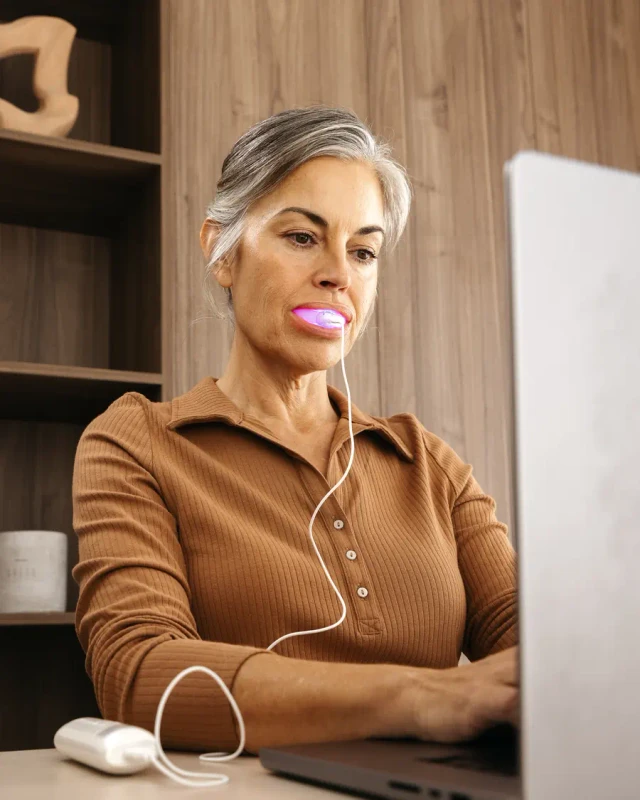
She ordered it. She told nobody. She started using it fifteen to thirty minutes a day.
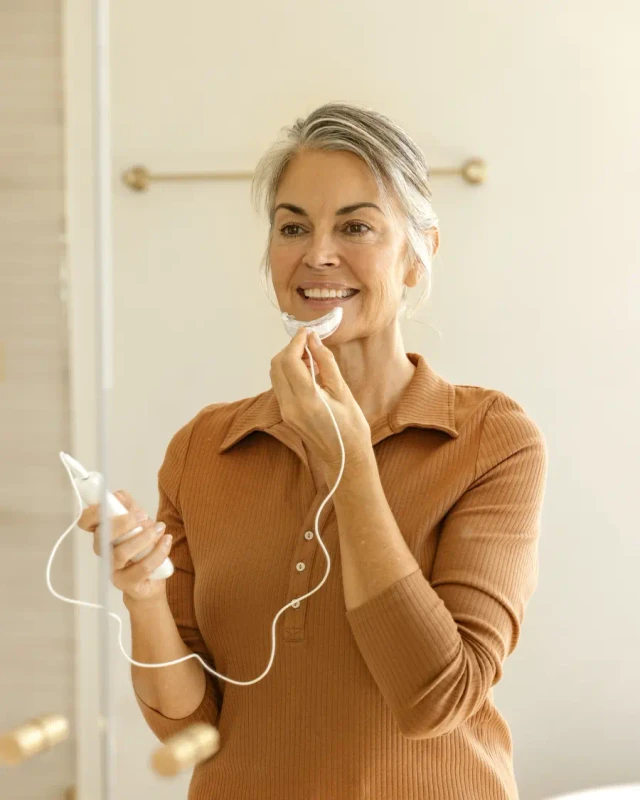
How Novaa Oral Care Pro actually works, in 3 steps
Red repairs
660 nanometre red light activates the mitochondria in gum cells. Injured cells regain the energy they need to produce healthy new tissue.
Blue kills bacteria
450 nanometre blue light penetrates the deep periodontal pockets that mouthwash cannot reach. Kills the anaerobic bacteria driving infection.
10 minutes a day
Full-mouth treatment through a fitted tray. Sixteen medical-grade LEDs. Eight red, eight blue. No dentist visit required.
Most periodontitis treatments attack the symptom. This one attacks the cause.
The bacteria driving gum disease live below the gumline, in periodontal pockets no toothbrush, mouthwash, or floss thread can reach. They keep secreting toxins that cut off blood flow, and tissue starved of oxygen slowly recedes.
Traditional treatment (scaling and root planing, sometimes gum surgery) scrapes the pockets clean. It removes the infection. It does nothing to restore the cellular energy the tissue needs to regrow.
That is the gap the two wavelengths close, an effect documented across more than 3,000 clinical studies: red light reactivates energy production inside injured cells, blue light reaches the same deep pockets and kills the bacteria hiding there. Ten minutes a day, both signals, every day.
This is what the clinical trials found. Here is what customers said.
Clinical evidence
Sources: peer-reviewed clinical trials referenced on NovaaLab.com
"I highly recommend Oral Care Pro as an excellent partner to periodontal treatment. It is a safe, effective way to reduce gum inflammation and bleeding at home."
Three weeks in, Tonia went to her scheduled follow-up. The same hygienist. The same tools. The same measurement chart.
The hygienist ran her probe along the gumline the way she had done every visit for years. She measured the pockets. She checked the tissue colour. She looked for bleeding on probing.
Then she stopped.
"She was shocked at the improvement," Tonia wrote. "My gums are pink and healthy rather than red and inflamed. No more bleeding, no more sensitivity, and whiter. The pockets of infection no longer measured as deep and are continuing to improve. It really worked on the bacteria in my mouth."
Then came the line.
The gum surgery was cancelled.
 → See how Tonia, Joseph, and 149,998 others fixed their gums at home.
Tonia is not a case study. This is a story we have watched repeat.
Joseph J.
Joseph's dentist told him he needed a deep cleaning. Receding gums. Pockets forming. He tried the Oral Care Pro instead. Four months later, his dentist ran the same checks.
No pockets. Receding gums back to normal. Almost no plaque.
The dentist said, "as much as I hate to say it, that thing worked wonders."
Joseph wrote that in his review. 434 people voted it helpful. The most of any review on the product.
Erin L.
Erin was already doing everything right. Brushing. Flossing. Oil pulling. Her periodontal issues were not from neglect. She added the Oral Care Pro. Nothing else changed.
At her next cleaning, her hygienist told her, "your gums are looking so much better."
The device is not a replacement for good oral hygiene. It is the thing that finally gets results out of hygiene that was already working as hard as it could.
What to expect week by week
Week 1
Swelling and soreness begin to settle, especially after meals or brushing. The mouth starts to feel "cleaner." Blue light disrupts bacterial colonies. Some users report noticeable relief from cold sensitivity within the first three days.
Weeks 2 to 3
Bleeding on brushing and flossing drops significantly. Gums look less red, less puffy. Sensitivity eases at the gumline. Sophie K. reported bleeding stopped at two weeks after decades of it. This is where most people start believing.
Week 4 and beyond
Measurable structural change. Pocket depth reduces (55% reduction on average, 4 to 6 weeks). Tissue firms and re-attaches. This is when a hygienist can objectively see and measure improvement. Tonia's follow-up appointment was at three weeks. Joseph's was at four months. The deeper the initial damage, the longer the full reversal takes.
Here is the part most first-time users miss.
The device rebuilds the gum tissue. But the newly regrown tissue is fragile for the first 90 days. A hard-bristled or aggressive electric toothbrush during that window can physically re-injure what you just spent weeks healing.
This is why NovaaLab pairs the Oral Care Pro with the GumCare Toothbrush. Not as an add-on. Not as an upsell. As the second half of the protocol.

The GumCare Toothbrush uses soft, silky bristles designed for freshly-healing gum tissue. It runs at up to 48,000 vibrations per minute, effectively removing plaque without the mechanical trauma of stiff bristles. And it has a pressure sensor that alerts you if you are pressing too hard, which most people do without realizing it.
This is the version dentists themselves recommend. It is also the version you will see on the checkout page as "the bundle."
The full protocol is $219. The device alone is $169.90.
You did not come this far to redo the work. The protocol is what actually holds.
Every Novaa Oral Care Pro comes with a full 60-day money-back guarantee. If your gums are not measurably better in that window, the device goes back, no questions asked. 94.8% of customers reported improvement in the 2022 study of 302 users. If you are in the 5.2% for whom it does not work, you keep nothing but the receipt.
Free US shipping. Ships in 2 to 5 days. HSA / FSA payments accepted.
The protocol is what actually holds.


